
Drywall Repair Mistakes That Show Through Paint
Updated June 3, 2026
Learn why drywall patches show through paint and which repair mistakes cause flashing, ridges, patch shadows, and uneven walls or ceilings.
- Trusted since 2005
- Fully insured
- Dust-controlled sanding
- Paint-ready finishing
- 3-year workmanship warranty
Quick Answer
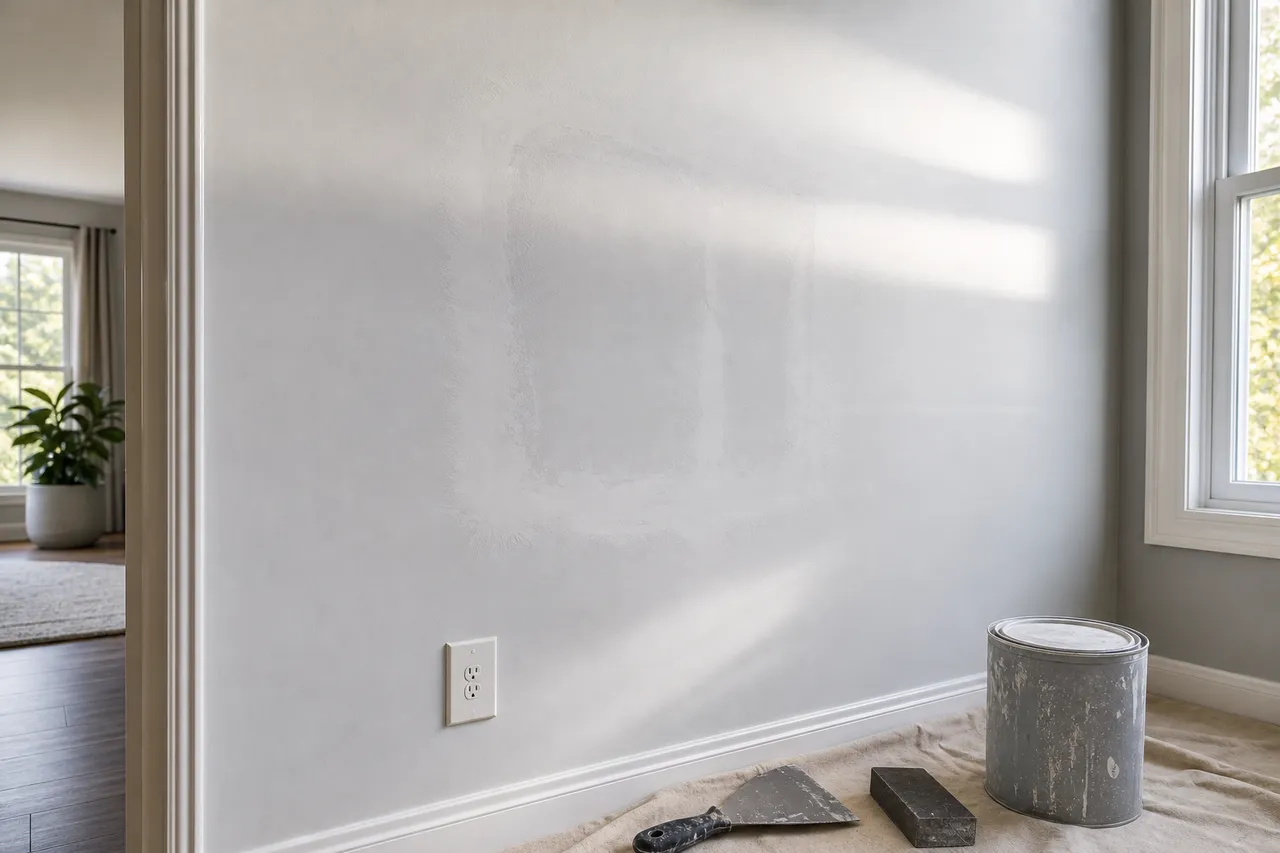
Drywall repair mistakes show through paint when the patch is not feathered wide enough, the surface is not sealed correctly, sanding is uneven, texture is mismatched, or primer is skipped. Paint can make patch lines, ridges, flashing, torn paper, and sanding scratches more visible instead of hiding them.
A drywall patch can look acceptable before paint and still look obvious after the final coat. This is frustrating because homeowners often expect paint to hide the repair. In reality, paint usually reveals the repair quality. It catches ridges, highlights sanding scratches, changes sheen over unsealed compound, and makes patch edges easier to see under side light.
EPF Pro Services handles drywall repair with the finish coat in mind. The goal is not just to fill the hole. The goal is to make the repaired area disappear after primer and paint.
This guide explains the drywall repair mistakes that show through paint on walls and ceilings, why they happen, and what a proper repair scope should include.
Mistake 1: Making the Patch Too Small
Small patches often look neat before paint because the repair area is compact. The problem is that a small patch can leave a hard edge. Drywall compound needs to be feathered wider than many homeowners expect so the transition from repair to existing wall or ceiling is gradual.
On ceilings, this matters even more because light travels across the surface. A patch that is only slightly raised can show as a shadow. Around pot lights, windows, patio doors, and long hallways, the repair needs to be blended carefully so it does not telegraph through the final paint.
A professional repair may look larger during the process because the feathered compound extends beyond the damaged spot. That is normal. A wider repair can be less visible when finished because the eye does not catch a hard patch outline.
Mistake 2: Skipping Primer Over Joint Compound
Fresh joint compound absorbs paint differently than painted drywall. If primer is skipped, the patch can flash. Flashing means the repaired area looks duller, shinier, lighter, darker, or different in sheen even when the paint colour matches. This is one of the most common reasons a drywall repair remains visible.
Primer seals the compound and helps create a more even surface for paint. On torn drywall paper, primer or sealer can also help lock down the damaged paper before compound is applied. Without proper sealing, the repair can bubble, fuzz, or absorb unevenly.
Mistake 3: Sanding Too Much or Too Little
Under-sanding leaves ridges, trowel marks, and rough edges. Over-sanding can expose tape, scuff the surrounding painted surface, or damage drywall paper. Both problems can show through paint. Sanding should flatten the repair without digging into the wall or ceiling.
Good sanding is controlled and checked under proper light. A repair that feels smooth by hand may still show under a work light. That is why finish checks are part of the process. It is easier to touch up compound before primer than to repaint after defects are visible.
Mistake 4: Not Fixing Torn Drywall Paper Correctly
Torn drywall paper needs special attention. If compound is applied directly over fuzzy paper, the moisture in the compound can make the paper swell. The repair may bubble, wrinkle, or show a rough edge after paint. The damaged paper should be trimmed, sealed, and then repaired.
This issue is common after wallpaper removal, popcorn ceiling scraping, plumbing access cuts, electrical work, and old adhesive removal. It is also common when a homeowner pulls off tape, hooks, mirrors, or glued trim.
Mistake 5: Ignoring Texture and Finish Level
A repair on a textured wall or ceiling has two jobs: restore the flatness and match the surrounding texture. A repair on a smooth wall or ceiling has a different challenge: the repair needs a clean finish level with no visible edge. Using the same patch method for both surfaces can lead to a mismatch.
If your repair is on a ceiling after popcorn removal, the finish expectations are closer to a Level 4 or Level 5 drywall finish than a quick patch.
Texture matching can be difficult because older texture changes with paint, age, and repairs. Smooth finishes can also be demanding because there is no texture to hide imperfections. The right method depends on the surface you want at the end.
Mistake 6: Painting Only the Patch
Touch-up painting can work in small, low-light areas if the paint is fresh and the sheen matches. Many times, painting only the patch leaves a visible square or halo. Paint colour changes over time, and different rollers can leave a different texture. Even the same paint can look different if it is applied years later.
For larger or high-visibility repairs, the wall may need to be painted from corner to corner. A ceiling repair may need a broader repaint, especially if the ceiling has flat paint and strong natural light.
Mistake 7: Treating Water Damage Like a Normal Patch
Water damage needs diagnosis before cosmetic repair. If the leak is active, patching and painting will fail. Stains may bleed through paint unless properly sealed. Soft drywall may need replacement, not skim coating. If there is mold concern, it should be handled appropriately before finish work begins.
A good repair starts by identifying why the drywall failed. Then the damaged material is removed or stabilized, the area is repaired, sealed, primed, and painted in a way that matches the surrounding finish.
How to Get a Cleaner Drywall Repair Result
Send clear photos from straight on and from an angle. Include a wider photo of the room so the lighting and location are clear. Mention whether the repair is on a wall or ceiling, whether the surface is smooth or textured, and whether the damage came from water, impact, electrical work, wallpaper removal, or popcorn ceiling removal.
For a deeper look at visible patch problems, see our guide on why drywall patches show through paint.
The best repair scope is based on the final viewing condition, not only the hole size. A patch behind a door is different from a ceiling repair in a living room with pot lights. A small visible repair done properly is often better value than a cheap patch that needs to be redone after paint.
Ceiling Patches Are Less Forgiving Than Wall Patches
Ceiling repairs show differently than wall repairs. On a wall, furniture, artwork, shadows, and normal viewing angles can make a small repair less obvious. On a ceiling, the surface is usually one broad plane. Natural light from windows and artificial light from pot lights travel across it. That makes ridges, patch edges, and sanding scratches easier to see.
This is why ceiling drywall repair often needs wider feathering and more careful sanding than a homeowner expects. A patch around a removed fixture, a pot light, a leak stain, or a popcorn removal gouge may need to be blended across a larger area so the repair does not look like a visible island after paint.
Paint Sheen and Colour Can Make Repairs More Obvious
Flat paint is common on ceilings because it reduces glare, but it still needs a properly prepared surface. Eggshell, satin, and semi-gloss paints can make drywall defects more visible because they reflect more light. Darker colours can also reveal surface defects differently than white or off-white paint.
Even when the colour is correct, the sheen can be wrong. If a patch is painted with old paint, a different batch, or a different roller texture, it can flash. That is why repair planning and painting strategy belong together. The drywall work should prepare the surface, and the paint work should blend the repair into the room.
What EPF Checks Before Calling a Repair Paint-Ready
A paint-ready repair should be checked by touch, by sight, and under light. The edge should not be raised. The compound should not have pinholes or scratches. Torn paper should be sealed. The patch should be feathered into the surrounding surface. Primer should be used where fresh compound is exposed.
On ceilings, the repair should be checked from multiple angles. On walls, the repair should be checked from the normal entry point and from the direction where daylight hits the wall. These checks take time, but they prevent the common situation where a patch looks fine until the room is painted and the furniture is back.
When a Small Repair Becomes a Larger Finish Scope
Sometimes the visible damage is only the symptom. A small ceiling stain may come from a leak that softened a larger area. A small crack may follow a seam that needs retaping. A dent near a corner may need corner bead work. A popcorn removal scrape may expose a long drywall joint that was hidden by texture.
In those cases, pricing only the visible mark is not helpful. The repair should address the full defect that will show after paint. That may mean a wider patch, additional coats, more drying time, primer, and painting a larger section so the result blends correctly.
Photos That Help Us Price Drywall Repair Accurately
Good photos make a drywall repair conversation much more useful. Take one close photo of the damage, one photo from a few feet back, and one wide photo showing the whole wall or ceiling. If the issue appears only when lights are on, send a photo with those lights on. If daylight exposes the patch, send a photo during the time of day when the defect is most visible.
For ceiling repairs, include the ceiling height and whether the area is over stairs, a kitchen island, cabinets, a bathtub, or furniture that cannot easily move. For wall repairs, mention whether the wall is smooth, textured, freshly painted, or part of a larger room that may need corner-to-corner painting. The more context we have, the easier it is to recommend a repair scope that matches the final finish.
Why Cheap Drywall Patches Often Cost More Later
A low patch price can be fine when the damage is small, hidden, and low-risk. It becomes a problem when the repair is in a visible room and the quote skips primer, proper feathering, texture matching, or repainting strategy. Once the patch shows through paint, fixing it usually means sanding the painted repair, applying more compound, priming again, and repainting a larger area.
That second visit is avoidable when the repair is scoped correctly the first time. A good drywall repair price should reflect the finish expectation, lighting, surface type, and paint plan, not only the size of the hole.
Before approving a repair, ask what the finished surface should look like after paint. Ask whether the repair includes primer, whether the surrounding wall or ceiling will be blended, and whether the paint will be touched up or rolled across a larger area. These questions quickly separate a cosmetic fill from a proper finish repair.
Final CTA
Send photos of the ceiling, room size, ceiling height, and whether the popcorn is painted. We can tell you what type of finish scope makes sense.
FAQ
Why can I still see a drywall patch after painting?
The patch may not have been feathered wide enough, primed correctly, sanded smooth, or blended with the surrounding surface. Paint often reveals patch edges and sheen differences.
Will primer hide drywall patch marks?
Primer helps seal joint compound and reduce flashing, but it will not hide ridges, dents, sanding scratches, or poor feathering. The repair must be smooth before primer.
Do drywall repairs need to be painted corner to corner?
Sometimes. Small touch-ups may blend, but visible walls and ceilings often need broader painting so the repaired area does not stand out.
Drywall service pages and guides
Plan the Right Drywall Service Next
Field Photos
What the Work Can Look Like
Article Review
AuthorEPF Pro Services
Reviewed byEPF Pro Services
UpdatedJune 3, 2026
Plan your drywall scope
Get a drywall quote today
Share photos, room sizes, and timing. We reply the same day with GTA drywall availability and a clearer written scope.
Quick next step