
Popcorn ceiling removal in Oakville: A Practical Homeowner Guide
Updated June 16, 2026
A practical Oakville homeowner guide to popcorn ceiling removal, covering quote factors, preparation, dust control, repairs, finish quality, timeline, and what to send for pricing.
- Trusted since 2005
- Fully insured
- Dust-controlled sanding
- Paint-ready finishing
- 3-year workmanship warranty
Quick Answer
A good popcorn ceiling removal quote should explain preparation, protection, the main work stage, repairs, finish quality, sanding or cleanup control, primer or paint handoff, and what photos are needed before pricing. The lowest price is not always the best value if it leaves rough patches, visible seams, poor paint readiness, weak trim lines, or cleanup problems after the crew leaves.
Oakville homeowners usually start with a simple question: what should I expect before booking popcorn ceiling removal? The honest answer depends on the condition of the ceiling, how much protection is needed, the finish standard, and whether the work is only a basic task or a full paint-ready scope.
If you are comparing options for basement popcorn ceiling removal Oakville, this guide explains the practical details behind the quote. For the service page connected to this topic, start with popcorn ceiling removal in Oakville. You can also compare the broader workflow on the Popcorn ceiling removal service.
Quick answer for Oakville homeowners
A good popcorn ceiling removal quote should explain preparation, protection, the main work stage, repairs, finish quality, sanding or cleanup control, primer or paint handoff, and what photos are needed before pricing. The lowest price is not always the best value if it leaves rough patches, visible seams, poor paint readiness, weak trim lines, or cleanup problems after the crew leaves.
What this guide covers
The sections below explain what changes the scope, how preparation and finish quality affect the result, and how to send details that lead to a cleaner written estimate. This guide puts extra attention on basement ceiling issues specific to popcorn ceiling removal, because that is one of the details homeowners need to understand before comparing quotes.
| Project condition | Why it matters for popcorn ceiling removal | Quote note |
|---|---|---|
| Painted texture | Usually slower to remove because paint can lock the texture together | Allow for extra scraping, surface repair, and skim coating |
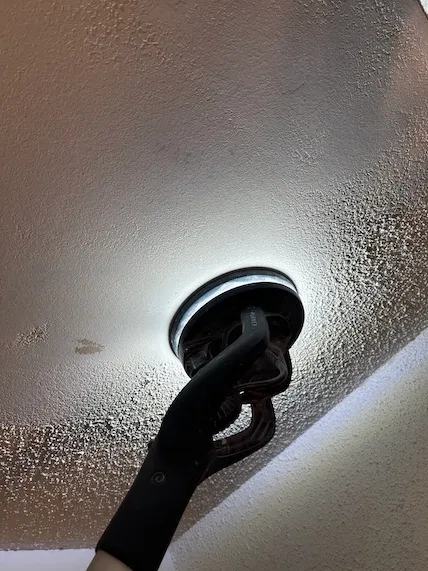
| Bright rooms or pot lights | Raking light can reveal small waves and seams | Consider a higher finish standard before painting |
| Occupied home | Furniture, floors, vents, and doorways need more protection | Confirm containment and daily cleanup in the quote |
| Previous repairs | Old patches can appear after texture comes off | Plan for drywall repair before primer |
Why the scope changes from home to home
Two homes in Oakville can ask for the same service and still need different pricing. Room size matters, but it is only one part of the estimate. Access, height, furniture, flooring, lighting, repairs, previous work, and how the final surface will be finished all change the amount of labour.
For popcorn ceiling removal, the biggest mistake is comparing quotes that do not include the same work. One contractor may be pricing only the obvious task. Another may include protection, repairs, finishing, controlled sanding, primer readiness, cleanup, and disposal where needed. Those are not the same scope, even if both quotes use similar service names.
A proper estimate should also match the condition of the home. An empty room is easier to protect and move through. An occupied home needs a cleaner plan for furniture, floors, vents, doorways, and daily cleanup. Condos, tight staircases, basements, high ceilings, and rooms with built-ins can all change setup time.
Preparation and protection should be part of the quote
Preparation is not a decorative line item. It is the part of the job that protects finished flooring, walls, trim, cabinets, fixtures, vents, and nearby rooms. In many finished homes, the protection plan is the difference between a manageable renovation and cleanup spreading through the house.
For EPF Pro Services, this usually means discussing the room condition before the crew arrives. Photos help identify furniture, floor type, access, ceiling height, trim details, vents, lighting, and problem areas. If the home is occupied, the quote should explain what needs to be moved, what can stay, and how the work area will be separated from the rest of the home.
Dust control should be described honestly. No contractor should promise that renovation work creates no dust at all. The useful question is whether the crew plans containment, careful sanding, HEPA vacuum support where appropriate, and daily cleanup. This matters for popcorn ceiling removal because dust and debris can travel through open rooms, stairs, and HVAC pathways if setup is rushed.
The main work stage is only one part of the result
Homeowners often focus on the obvious task, but the final result usually depends on what happens after that stage. With popcorn ceiling removal, the work may reveal uneven areas, damaged paper, old repairs, open seams, rough transitions, adhesive residue, trim gaps, or surfaces that need more preparation before primer or paint.
That is why a contractor should explain the handoff point. Does the job end after the first visible task? Does it include scraping, skim coating, sanding, primer, and flat ceiling paint? Does it include primer? Does it include final paint? If painting is excluded, is the surface actually ready for a painter, or will the painter need to repair and sand again?
This is also where finish quality matters. A surface can look acceptable in low light and still show waves, seams, scratches, or patch edges once daylight or pot lights hit it from the side. Bright rooms, open-concept areas, and ceilings usually need more careful finishing than small low-light rooms.
Cost factors to compare before choosing a contractor
Price depends on the real scope. A realistic quote for popcorn ceiling removal in Oakville should consider size, height, access, condition, protection, repair needs, finish level, cleanup, and whether primer or painting is included. When a price looks much lower than the rest, ask which of those items are missing.
The most useful way to compare quotes is to put them side by side by inclusion. Does each quote include setup and protection? Does it include the same number of rooms? Does it include repair after the main work? Does it include sanding control? Does it include primer, paint, caulking, or disposal? Does it explain what happens if hidden damage appears?
For cost-focused searches, the answer is rarely one fixed number. A small, empty, simple room can be priced differently from a furnished main floor, a basement with difficult access, a room with high ceilings, or a surface that has been painted, damaged, or previously repaired. Photos and rough dimensions make the quote more accurate before a site visit.
Common quote mistakes to avoid
The first mistake is accepting a one-line price without knowing what it includes. A short price can be fine for a very small task, but for most home renovation work it should still explain the rooms, the preparation, the visible work, the finish stage, cleanup, and exclusions. If the scope is unclear before the job starts, every surprise becomes harder to resolve.
The second mistake is assuming the final finish is included because the service name sounds complete. For example, a removal scope may not include refinishing. A repair scope may not include primer. A trim installation scope may not include paint. A painting scope may not include deeper wall repair. Ask where the contractor's responsibility ends and what the surface will look like at that point.
The third mistake is not asking about occupied-home logistics. If the work area has furniture, finished flooring, pets, kids, tenants, condo rules, or limited parking, those details should be discussed before scheduling. A contractor who plans for access and protection usually creates less disruption than one who prices the room as if it were empty.
The fourth mistake is comparing a fast timeline against a proper dry-time schedule. Some steps cannot be rushed without affecting quality. Compound, primer, caulk, and paint all need the right conditions. A schedule that sounds very fast may be missing repair, sanding, primer, cleanup, or final inspection time.
Finish level and final inspection
Finish level should match how the room will be used and seen. A low-visibility utility room does not always need the same finish standard as a bright living room, a main-floor ceiling, a hallway with strong side light, or a freshly renovated space with new flooring and trim. The right scope is not always the most expensive one; it is the one that fits the final expectation.
Before approving the job, look at the surface from more than one angle. Daylight, pot lights, and side lighting can reveal issues that overhead light hides. Check seams, corners, transitions, patched areas, texture shadows, trim lines, and areas around vents or fixtures. Small corrections are easier before the crew packs up than after furniture is moved back in.
A good contractor will not be offended by clear expectations. The best projects usually start with a shared definition of done: what rooms are included, what level of finish is expected, whether paint is included, how cleanup is handled, and what happens if hidden damage appears during the work.
Contractor field note
The cleanest projects are usually the ones where the homeowner sends useful photos before asking for a number. Wide photos show access and protection needs. Close photos show texture, cracks, stains, seams, trim details, corners, or previous patches. Room dimensions and ceiling height help separate a rough guess from a real scope.
Another field detail: the finish stage should be discussed before work starts, not after the surface is already open. If the final goal is a high-quality painted result, the quote has to allow for the steps that create that result. Removal, repair, sanding, primer, and paint-readiness are connected; treating them as separate afterthoughts usually creates frustration.
DIY vs professional work
DIY can make sense for small, low-visibility tasks where the homeowner has time, patience, and the right tools. It is less forgiving on large visible surfaces, ceilings, bright rooms, trim transitions, or anything that needs to look clean after paint. A small mistake can become more visible after primer and finish coats, not less visible.
Professional help is usually the better choice when the surface is large, high, painted, damaged, affected by water, connected to other trades, or part of a larger renovation schedule. It is also the better choice when the room is occupied and dust control, floor protection, and cleanup need to be handled carefully.
If the home is older and asbestos is a concern, testing should be handled before disturbance. The blog should not be used as a hazardous-material removal guide.
What a complete quote should explain
A thin quote may name the service without explaining the details homeowners need to compare real scopes. A complete quote should explain protection, dust control, repair after the first work stage, finish level, primer or paint handoff, timeline, cleanup, and what photos to send. Those details are exactly what determine whether a project feels organized or stressful.
Fast, affordable, and professional are not enough by themselves. A homeowner needs to know what happens in the room, what is included, what can change the price, and how the final surface will be judged. This guide is built around those practical questions rather than a list of sales claims.
Details to clarify before comparing quotes
Before comparing prices, clarify basement ceiling issues specific to popcorn ceiling removal, low basement ceiling height and how it affects prep, access, and final appearance, bulkheads, ductwork, beams, pot lights, vents, and utility access panels, older basement renovations with patchy texture, water stains, cracks, or uneven drywall, painted versus unpainted basement texture and why removal difficulty can vary. Those details help separate a basic scope from a cleaner plan for protection, dust control, repairs, primer, paint readiness, and finish quality.
Timeline and disruption
Timeline depends on the number of rooms, drying time, access, repairs, finish level, and whether the home is occupied. Some small scopes can be completed quickly. Larger scopes may need multiple visits because compound, caulk, primer, or paint needs time to dry properly before the next step.
Rushing drying time is one of the easiest ways to create visible defects later. Joint compound can shrink. Primer can reveal scratches. Caulk can split if painted too soon. A cleaner schedule allows the crew to check the surface under real lighting and correct issues before calling the room finished.
The quote should also explain how the project affects daily life. Which rooms are unavailable? Can furniture stay? Is there a sanding stage? Will there be daily cleanup? Are there odour, noise, access, or parking concerns? These details matter in finished homes, condos, and busy family spaces.
Local service connection in Oakville
EPF Pro Services works with homeowners across Oakville and nearby GTA service areas. The goal is not only to complete the visible task, but to leave the space protected, cleaned up, and ready for the next finish step. For local service details, use the <a href="/popcorn-ceiling-removal/oakville/" class="text-blue-600 font-semibold hover:underline">popcorn ceiling removal in Oakville</a>.
Local work should not be city-swapped filler. The useful local point is practical: homes differ by age, room layout, access, lighting, renovation history, and whether the family is living in the space during the work. Those details matter more than broad claims about the city.
What to send for a clearer quote
For the most accurate next step, send wide photos of each room, close photos of the problem areas, rough dimensions, ceiling height where relevant, whether the home is occupied, and any timing constraints. Mention stains, cracks, previous patches, pot lights, vents, crown moulding, cabinets, flooring, stair access, or building rules.
If you already have a target finish in mind, say so. A basic repair, paint-ready repair, smooth ceiling, Level 5 finish, trim installation, or full repaint can all mean different scopes. Clear expectations help EPF recommend the right approach before the project starts.
Simple homeowner checklist before approving the scope
- Confirm the exact rooms, surfaces, and approximate dimensions included in the quote.
- Confirm what protection is included for floors, furniture, fixtures, vents, trim, cabinets, and nearby rooms.
- Confirm whether repair, sanding, primer, paint, caulking, disposal, and cleanup are included or excluded.
- Confirm the expected finish level and whether the surface is paint-ready or fully painted at completion.
- Confirm the timeline, number of visits, drying time, access needs, and whether the home can be occupied during the work.
- Confirm how changes are handled if hidden damage, extra repair, or a different finish level is needed.
When you are ready, request a quote with photos. Include the service, city, photos, rough room sizes, and the result you want. That gives the team enough information to respond with a more useful next step instead of a generic number.
Related guides and service pages
- Popcorn ceiling removal in Oakville: Local service page for the target city and service.
- Popcorn ceiling removal service: Main service page for this service.
- popcorn removal cost and finish guide: Cost factors, dust control, and smooth ceiling finish quality.
- painted popcorn ceiling removal guide: How painted texture changes scraping, skim coating, and finishing.
- request a renovation quote: Send photos and room details for review.
Bottom line
Popcorn ceiling removal in Oakville: A Practical Homeowner Guide is not only about finding a quick price. It is about understanding what the quote includes, how the home will be protected, what finish quality is realistic, and what information helps the contractor price the job properly. A clear scope protects both the homeowner and the finished result.
FAQ
How much does popcorn ceiling removal cost in Oakville?
Cost depends on room size, access, surface condition, repairs, protection, finish level, cleanup, and whether primer or painting is included. Photos and rough dimensions help narrow the quote.
What should I send for a popcorn ceiling removal quote?
Send wide room photos, close photos of problem areas, approximate dimensions, height where relevant, whether the home is occupied, and any timing, access, parking, or building rules.
Can this work be done with dust control?
Dust cannot be eliminated completely, but proper protection, containment, controlled sanding, HEPA vacuum support where appropriate, and cleanup can reduce mess and protect the rest of the home.
When should I hire a professional instead of doing it myself?
Hire a professional when the area is large, highly visible, high, painted, water-stained, cracked, affected by other trades, or needs a clean paint-ready finish.
Does the quote include painting?
Not always. Ask whether the quote includes primer, finish coats, trim or ceiling paint, touch-ups, and final cleanup so you are comparing the same scope.
Related local pages and guides
Keep Planning Your Project
Popcorn ceiling removal in Oakville
Local service page for the target city and service.
Popcorn ceiling removal service
Main service page for this service.
popcorn removal cost and finish guide
Cost factors, dust control, and smooth ceiling finish quality.
painted popcorn ceiling removal guide
How painted texture changes scraping, skim coating, and finishing.
request a quote with photos
Contact path for homeowners who want a clearer written scope.
Field Photos
What the Work Can Look Like
Article Review
AuthorAlex - EPF Pro Services
Reviewed byEPF Pro Services
UpdatedJune 16, 2026
Ready to plan your ceilings?
Get a popcorn ceiling quote today
Share photos, ceiling heights, and timing. We reply the same day with Oakville availability.
Quick next step