
Re-Tape or Replace Garage Drywall? (2026 Repair Guide)
Updated September 11, 2026
Sound board with failed reinforcement may be suitable for re-taping. Compromised board needs correction or replacement before a dependable joint can be finished.
- Trusted since 2005
- Fully insured
- Dust-controlled sanding
- Paint-ready finishing
- 3-year workmanship warranty
Quick Answer
Sound board with failed reinforcement may be suitable for re-taping. Compromised board needs correction or replacement before a dependable joint can be finished.
Re-taping can be a sensible repair when garage drywall is sound and the failed part is the joint reinforcement. Replacing board becomes a different discussion when a panel is badly damaged, unreliable or unsuitable to retain. The decision should follow an assessment of the existing construction and the repair boundary, rather than the assumption that new board is always better or that every damaged wall can be saved.
EPF's garage drywall repair and re-taping service can distinguish local joint work from board correction and broader refinishing. This guide helps you compare those scopes before accepting a quote. It does not establish a structural diagnosis, a universal replacement threshold or one construction detail for every attached garage.
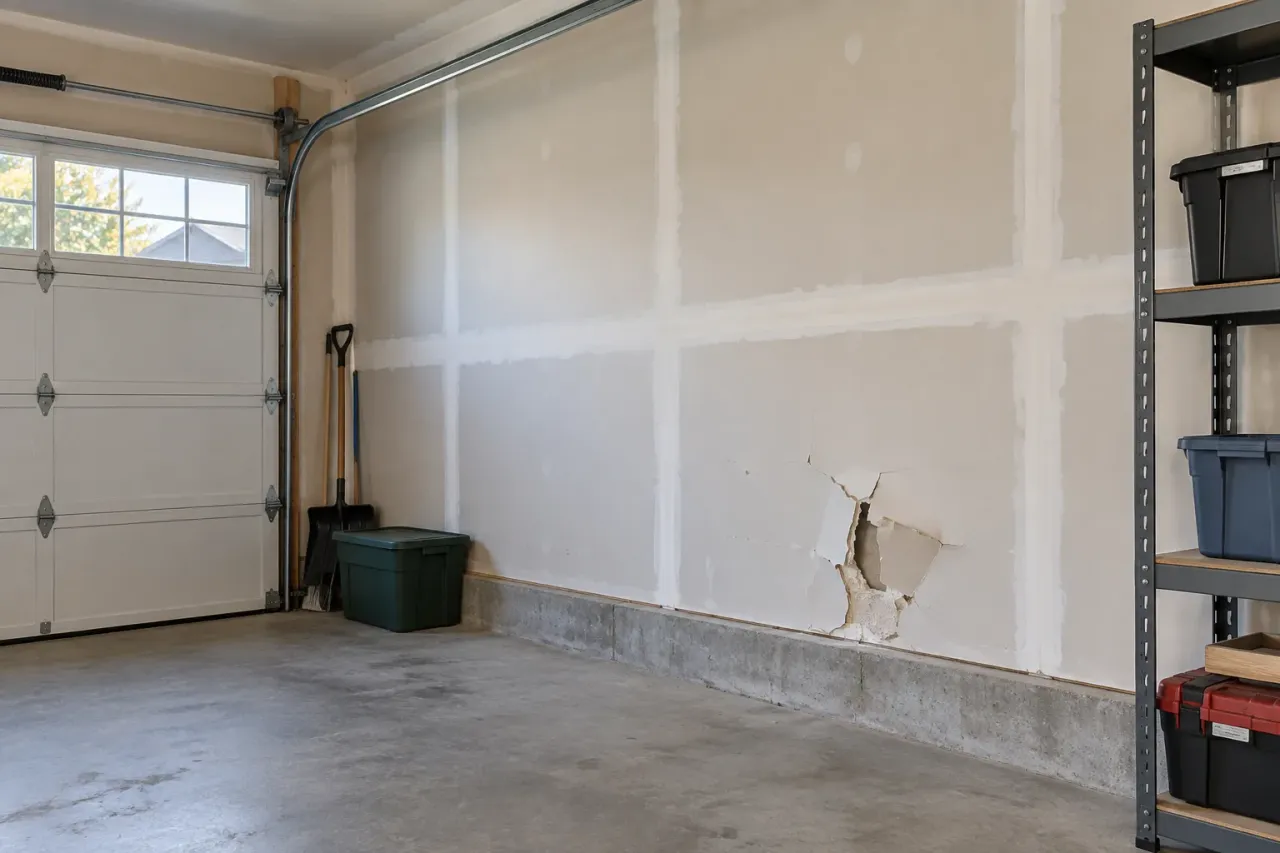
Start with the condition you can see
Use these observations to prepare the assessment, not to diagnose concealed construction. Pair each detail photograph with a wider view so the repair area, adjoining surfaces and access are clear.
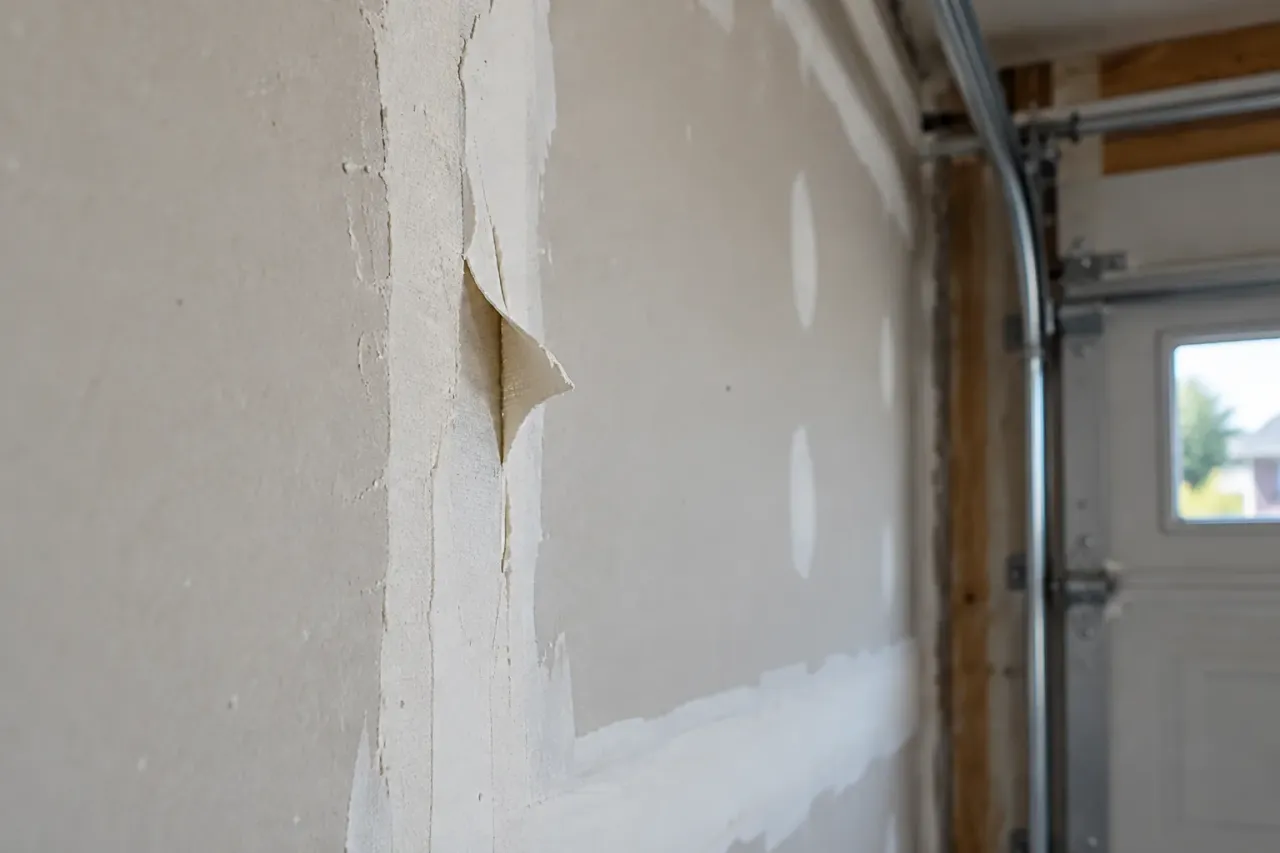
Sound board, failed tape
Assess local joint rebuilding.
Damaged board section
Define suitable support and replacement boundaries.
Uncertain cause
Investigate before selecting a cosmetic repair.
Begin with three separate questions
First, is the board itself suitable to retain? Second, is the joint reinforcement sound? Third, does the finished appearance meet the new goal? Keeping those questions separate prevents a common mistake: choosing replacement because a wall looks rough, or choosing a cosmetic skim because only a small part of the damage is visible.
A panel may be secure and intact while its taped joint has failed. Another wall may have strong joints but a damaged section from impact. A third may be sound throughout yet need better surface finishing before paint. The same phrase, garage drywall repair, can describe all three, although their preparation and final cost differ substantially.
Ask the estimator to describe which condition applies to each area. A marked photograph or short room sketch can be more useful than a single total for fixing the garage. When the board cannot be assessed fully from photos, the proposal should identify that uncertainty and explain the next review before work is finalized.
When re-taping is worth considering
Local joint rebuilding can be considered where the surrounding board and construction provide a suitable base. Failed tape may need removal within an assessed boundary, followed by preparation and new reinforcement. Sound nearby finishing does not necessarily need to be stripped simply because one part has separated.
The length of the visible flap is not always the repair length. A joint may need to be opened farther to reach suitable material or permit a reliable transition. Ask the contractor to explain the expected boundary and how additional findings will be handled. A small exposed edge should not be treated as a fixed final quantity before the joint is reviewed.
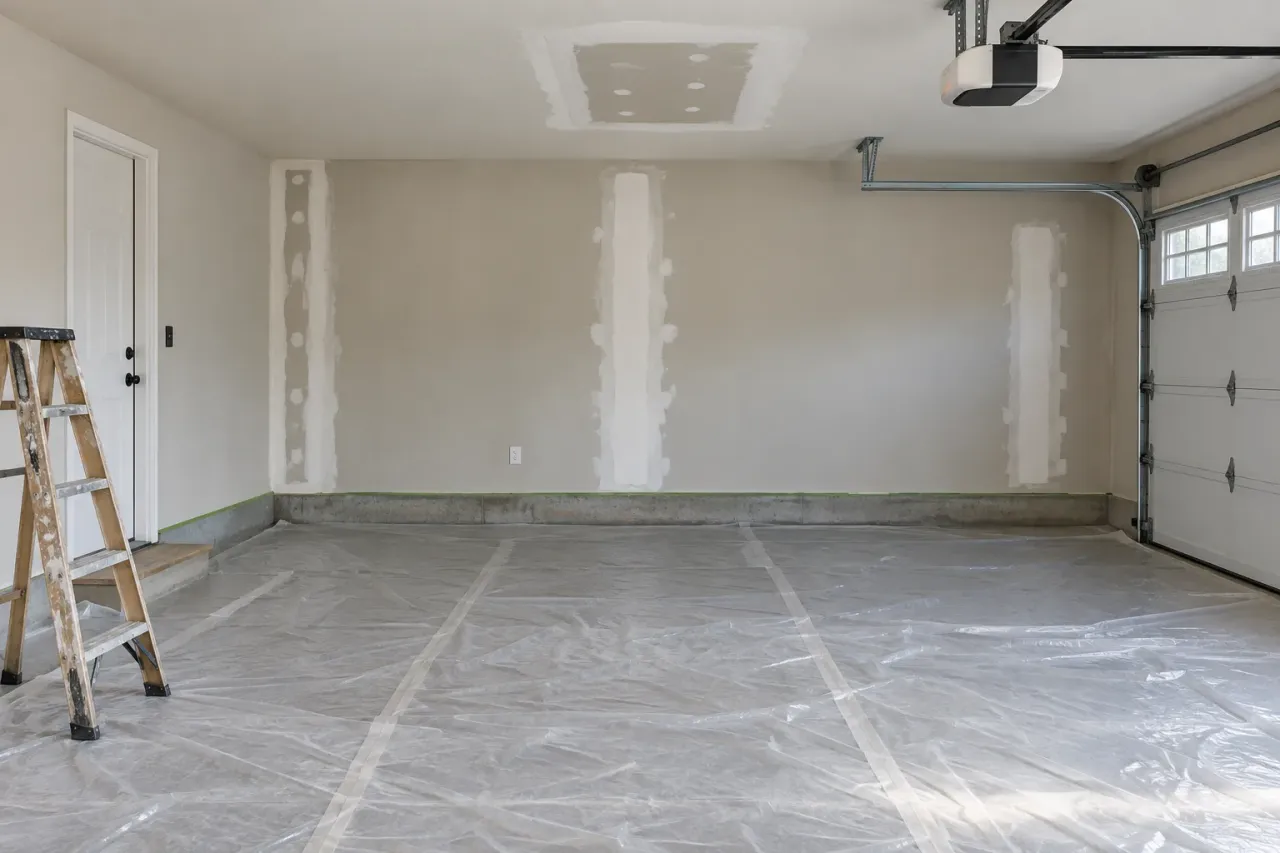
Re-taping still involves finishing and decoration decisions. New compound must blend into the retained surface, and primer or painting may extend beyond the repaired strip. If the objective is only to rebuild the joint, state what appearance will remain around it. If a clean painted wall is the objective, include that wider handoff in the comparison.
When a board patch may be enough
An isolated impact hole can sometimes be repaired with a supported drywall patch while most of the wall remains. The appropriate boundary depends on surrounding condition, accessible support and any relevant assembly requirements. It should allow the patch and joints to be completed properly rather than follow only the irregular shape of the opening.
A patch also needs room for finishing. A narrow repair wedged beside a corner, shelf or doorway can require more care than a larger open area. Show those transitions in photos and discuss how the new section will blend. The size of the replacement piece and the area of compound treatment are different quantities.
Do not enlarge an opening or install random backing before concealed services and existing construction are understood. Homeowners can supply dimensions and photos without turning the estimate into demolition. If the repair affects an attached-garage assembly, the appropriate detail needs to be confirmed rather than improvised from a generic patching video.
Conditions that can make replacement necessary
Board that is severely damaged, compromised by moisture or inadequately attached may not provide a suitable finishing base. Where it cannot be retained reliably, replacement becomes part of the scope. The visible damage should be assessed alongside the surrounding construction instead of deciding solely from an old stain or a close-up of broken paper.
If the area is loose, sagging or changing shape, arrange the appropriate assessment before normal use beneath or beside a suspect section. This is especially relevant overhead. A finishing contractor should not be expected to diagnose supporting construction online or certify that a panel is safe simply because it can be covered with compound.
Water-related damage requires the source to be addressed and affected materials assessed before cosmetic restoration. Replacement is not a substitute for fixing an active leak, just as a dry-looking surface does not establish the condition behind it. Where there are suspect materials or uncertain contamination, the relevant professional review belongs before routine drywall work.
Replacement should have a reason and a boundary
Ask why the proposed board cannot remain. The explanation should refer to condition, support, a required construction detail or a repair that cannot be completed appropriately within the existing area. Replacing a whole wall merely because it has rough compound is different from replacing compromised panels, and the homeowner should understand that distinction.
The chosen boundary should connect to suitable retained construction and permit the intended finishing. A larger, regular repair may sometimes be more workable than a collection of narrow strips. That is a scope judgment, not a universal rule. The estimator should explain how the boundary serves the repair instead of promising the smallest possible opening at any cost.
Also ask what happens at corners, door returns and adjoining ceilings. Board replacement may create new joint work at those transitions. A proposal that identifies only the central sheet can leave important finish details unpriced. A clear sketch helps everyone understand what remains and what will be disturbed.
Do not confuse rough finishing with failed board
Some garages have a utility finish that leaves joints and fastener spots visible. The homeowner may now want a smoother workshop or painted space. That change in expectation can call for additional finishing without establishing that the original board is defective or that every surface should be rebuilt.
Sound rough joints may be reshaped and blended. An uneven patch may need preparation before broader smoothing. Loose tape, on the other hand, needs its failure addressed before an appearance coat is added. Sorting those conditions lets you price essential repairs separately from a selected-wall or whole-garage finish upgrade.
The guide to improving rough garage drywall explains retained-board options. Use it if the main concern is visible ridges and inconsistent finishing rather than compromised panels. A smooth result starts with suitable existing work, but it does not automatically require replacing every surface that currently looks unfinished.
How to compare two different contractor proposals
Imagine one proposal describes re-taping selected seams and another describes replacing a damaged wall section. Before comparing totals, ask what each contractor assumes about the board. They may be proposing different work because they saw different evidence, inspected different areas or included different preparation. The lower number alone does not resolve that difference.
Request a simple scope comparison: retained board, removed material, necessary corrections, new joints, blending area and decorating handoff. Include protection and cleanup. If an item is uncertain, mark it as an assessment requirement rather than treating it as free or assuming the larger proposal is automatically excessive.
For mixed work, one written total can be practical as long as its inclusions are clear. A useful quote does not have to price every screw separately. It should make the major decisions reviewable so the homeowner can understand what condition the garage will be left in and which later work still needs to be arranged.
Board supply and material choices need confirmation
Where replacement is required, confirm who supplies the board and the specified finishing materials. The appropriate board and assembly detail depend on the existing construction and project requirements. Do not choose thickness or a labelled board type solely because it appears more substantial or because another garage used it.
If you already have leftover material, ask whether it is suitable before expecting it to be used. Product condition, compatibility and the existing specification all matter. Providing supplies does not eliminate preparation, installation or finishing labour, and it should not obscure responsibility for the resulting repair scope.
A broader new-board project may be better compared with the drywall installation service. Keep that separate from a local repair quote. Supplying and hanging panels over a larger area is not the same work as rebuilding a joint on retained board, even when both finish at a paint-ready surface.
Access can change the practical choice
A wall hidden by fixed shelving or equipment can limit inspection and finishing. A ceiling near tracks and lights adds overhead coordination. Show those details before the contractor selects a repair method. The most efficient repair in an empty room may need a different sequence when access is restricted.
Agree on which belongings will be moved, who moves them and when the space must be clear. A cover over a vehicle does not create a safe or useful work platform. Keep household access out of active work zones and plan how waste and materials will leave the garage without crossing delicate stored items.
If door hardware, electrical fixtures or other services prevent access, coordinate the appropriate trade. Do not alter springs, tracks or wiring yourself to make the drywall job smaller. The quote should identify related work or exclusions so a repair does not stall after the garage has already been prepared.
Replacement adds new finishing stages
New board does not arrive as a completed painted wall. Its joints, corners and fasteners still need appropriate treatment, followed by drying, surface refinement and preparation for decoration. Replacing a section can therefore introduce more new joints than a homeowner expects from the size of the damaged area.
The selected finish level should suit the intended paint and lighting. A standard specification may be sufficient for many garage surfaces, while demanding appearance conditions can justify a broader discussion. A whole-surface skim is an additional finish treatment, not a correction for unstable support or poorly aligned board.
Ask how the new work will meet the retained coating. Primer may reveal minor defects that need correction before final paint. If another person is painting, assign that inspection and touch-up responsibility in advance. A neatly installed patch can still look different if the decorating boundary was never planned.
Cost follows the complete repair, not just the panel
The board itself is only one part of replacement work. Assessment, protection, removal, support, installation, joint finishing, drying intervals and cleanup all contribute to the project. Re-taping has its own preparation and visit requirements, so a comparison based only on sheet price or seam length can be misleading.
The garage drywall repair cost guide explains how to describe these items for an estimate. It does not advertise a universal per-square-foot repair rate. A garage's floor footprint does not reveal the amount of damaged wall, overhead work or coating needed to reach the agreed result.
When comparing options, include the cost of the same final condition. A replacement quote that includes primer and paint cannot be compared directly with a re-taping price that stops at sanding. List the remaining stages beside each proposal and ask for unpriced work to be clarified before choosing.
When to pause the finishing decision
If there is continuing moisture, unexplained movement or uncertainty about an existing required assembly, the correct next step may be further assessment. Choosing between re-taping and replacement too early can put a finish over a problem that has not been resolved. The cosmetic repair should follow the relevant findings.
Attached garages can include construction requirements beyond what is visible on the decorated face. Where substantial replacement or alteration affects those details, confirm the appropriate approach with the responsible professional or authority. This guide does not prescribe one fire rating, board thickness or permit rule for all garages.
A pause for specific information is different from abandoning the project. Ask what needs to be established, who can establish it and how the drywall scope will be updated afterward. That keeps the repair moving toward a defined outcome without expecting the finisher to certify conditions outside the available evidence.
Send the information that supports the decision
Provide your city, a wide view of the garage, full views of affected walls or ceilings and close-ups of the damage. Add approximate dimensions, any known moisture or repair history, and photographs of access restrictions. If you have drawings or a previous scope, keep them available for the assessment.
Explain the outcome you want: a local repair, an improved visible wall or a more complete garage refinish. Mention whether primer and painting should be included. This helps EPF separate the necessary correction from optional appearance work and choose the right starting point for a quote.
Use the existing quote form to describe the problem and share a photo link if available. A useful proposal should explain what is being retained, why any board must be replaced and how the new finish will connect to the rest of the garage. That is the comparison that matters more than simply choosing the option with the most new material.
Planning this repair in Grimsby
For a Grimsby estimate, include your address or nearest intersection and identify each damaged seam or board section. If there are only a few repairs, group the photographs into one enquiry and state whether primer or painting is wanted, so the proposed scope and return visits can be assessed together.
EPF serves all Grimsby neighbourhoods. Review Grimsby garage repair coverage and neighbourhoods, then include your location with the repair details when requesting an estimate.
FAQ
Does rough garage drywall need replacement?
Not necessarily. Sound rough finishing may be improved. Failed reinforcement and compromised board need separate assessment.
Can a damaged section be replaced without removing the whole wall?
A local replacement can be considered where the surrounding construction supports an appropriate repair and finishing boundary.
Why does the painting area extend past the board patch?
Compound blending and paint consistency may require a wider area than the replacement piece. Define each boundary in the quote.
Is new board always the more reliable choice?
The choice should follow condition and construction requirements. Replacement without addressing an unresolved cause does not by itself solve the problem.
Field Photos
What the Work Can Look Like
Article Review
AuthorEPF Pro Services
Reviewed byEPF Pro Services
UpdatedSeptember 11, 2026
Plan your drywall scope
Get a drywall quote today
Share photos, room sizes, and timing. We reply the same day with GTA drywall availability and a clearer written scope.
Quick next step