
Garage Drywall Repair Cost Factors (2026 Guide)
Updated September 11, 2026
Garage repair cost follows the failed areas, required preparation and finish—not floor size alone. A useful estimate separates joint repairs, board work, access and decoration.
- Trusted since 2005
- Fully insured
- Dust-controlled sanding
- Paint-ready finishing
- 3-year workmanship warranty
Quick Answer
Garage repair cost follows the failed areas, required preparation and finish—not floor size alone. A useful estimate separates joint repairs, board work, access and decoration.
Garage drywall repair cost depends on the failed areas, the condition of retained material, access and the finish you want afterward. Garage floor area alone does not describe those tasks. A useful estimate separates joint repairs, damaged board, preparation, finishing, protection and decoration so you can compare proposals that actually reach the same result.
EPF's garage drywall repair service can assess local re-taping or a broader repair and refinishing scope. This 2026 guide does not advertise a fixed garage repair rate because the work varies substantially. It explains what to measure, what to photograph and which inclusions should be clear before you accept a project total.
Start with the condition you can see
Use these observations to prepare the assessment, not to diagnose concealed construction. Pair each detail photograph with a wider view so the repair area, adjoining surfaces and access are clear.
Joint work
Record affected lengths, corners and previous repairs.
Board work
Identify damaged areas and assessment needs.
Project total
Include setup, visits, finishing and chosen decoration.
Why a square-foot garage price can be misleading
A garage's floor footprint tells you little about the number of failed wall joints, ceiling repairs or old patches. One garage can have a single accessible seam while another of the same size needs board replacement and substantial preparation. Treating them as identical square-foot jobs hides the work that drives the estimate.
Even the phrase square foot needs clarification. A contractor may mean actual drywall surface, floor area or a separate broad-finishing allowance. Ask which unit is being used. A rate for finishing newly installed sound board is not automatically suitable for removing failed tape and rebuilding an older repair.
A written project total can be more useful than a unit rate when the defects are varied. The total should still describe included areas, preparation and the final handoff. You do not need every small task priced separately, but the major assumptions should be clear enough to compare with another proposal.
Record the failed seams by location
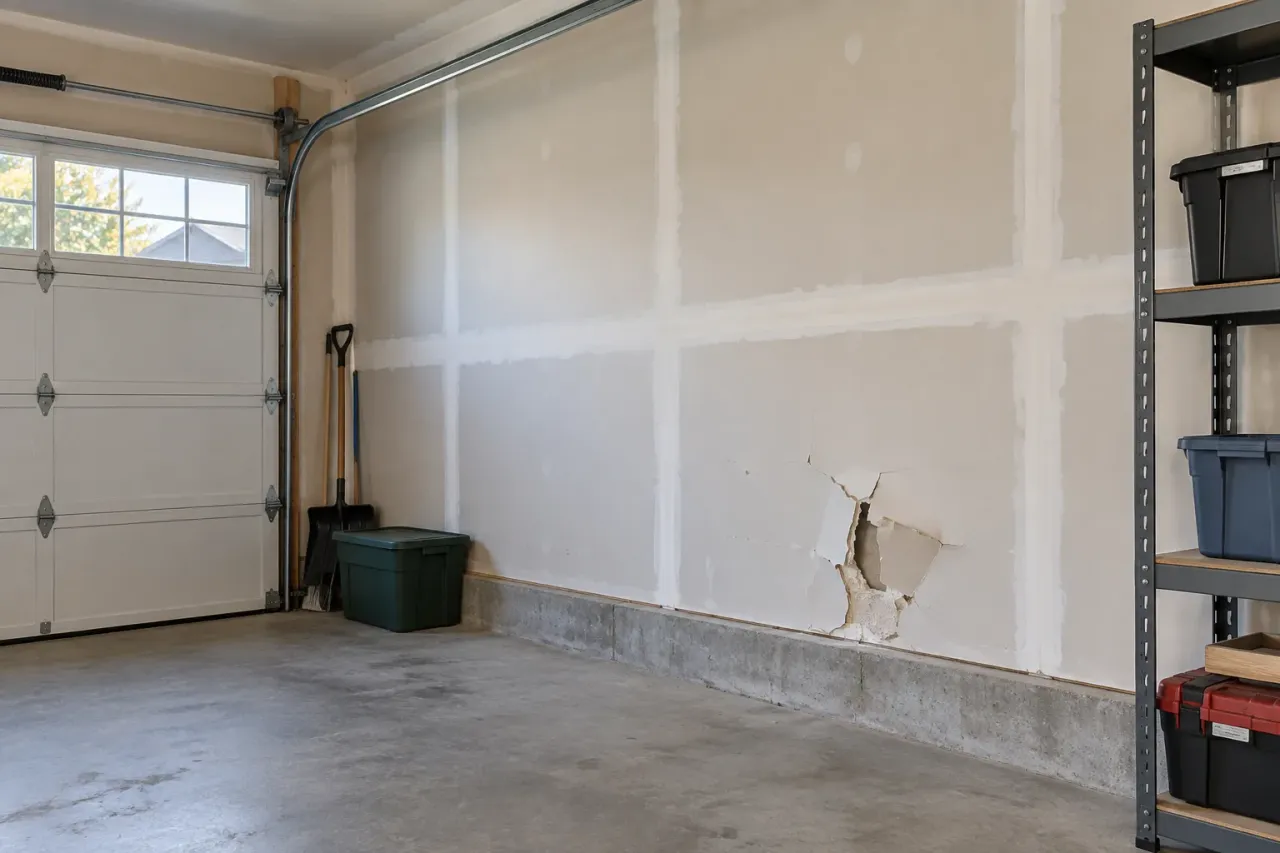
Start with a simple sketch showing each wall and ceiling plane. Mark peeling tape, cracked joints and previous patches separately. Approximate lengths help explain the work, especially if the seams run behind shelves or turn into corners. Do not assume the exposed flap establishes the final repair boundary.
A hypothetical garage might have two six-foot wall joints and one eight-foot ceiling seam needing assessment. That is twenty feet of identified joint concern, but it is not twenty feet of identical labour. The ceiling access, corners, retained coating and extent of failed material can make each part different.
Pair the sketch with numbered photos. One broad view and one close-up per area are usually more useful than a large set of unlabelled details. The estimator can then identify omissions and ask relevant questions rather than price a general statement that some garage tape is coming off.
The condition beneath the tape changes the scope
If the board is suitable and failure is limited to reinforcement, a local re-taping scope may be considered. It can include removing failed material, preparing the joint, installing suitable tape and completing the finish. The visible strip does not show all the preparation that may be required.
Compromised board creates a different scope. Appropriate corrections or replacement may be needed before joint finishing can begin. The re-tape or replace guide explains how to compare those proposals without assuming that either the smallest repair or the most new board is always the best choice.
Ask the contractor to identify uncertainties that cannot be resolved from photographs. If concealed conditions may affect the boundary, agree how findings will be reviewed before additional work proceeds. An estimate should not hide those questions inside an undefined promise to fix everything for one unqualified rate.
Previous repairs can add preparation
A wall that has already received several patch attempts may look farther along than it is. Existing compound can be raised, detached or unsuitable to retain. The contractor needs to assess whether it can be incorporated, reshaped or removed within an appropriate repair boundary.
Tell the estimator what was done before and whether the defect returned in the same place. Keep available product labels and photos. Unknown history is not a reason to invent details; it is a condition to account for in the assessment and scope.
A price that assumes clean, sound joints may change when the actual work includes removing failed earlier repairs. Compare the preparation assumptions in each proposal. Otherwise a seemingly inexpensive quote can describe a different starting condition from the garage you are asking the contractor to repair.
Ceiling height and obstructions matter
Overhead joints require suitable access and protection beneath them. Garage door tracks, openers, lights and stored equipment may limit the available work area. Include ceiling height and broad room photos in the request so the estimate does not assume an unobstructed flat ceiling.
Do not move springs, tracks or electrical fixtures yourself to reduce the drywall quote. Necessary changes belong with the appropriate trade. The proposal should identify those dependencies and whether their coordination is included or separate from the repair contractor's scope.
A wall repair can also be difficult to reach behind fixed benches or shelving. Agree which belongings will move and who handles them. The size of the patch alone is not a complete measure of labour when a substantial part of the project is creating and protecting a workable area.
Board replacement has more than a material cost
Where board must be replaced, the estimate can involve protection, removal, waste handling, appropriate support and installation before new joints are finished. The price of a drywall sheet does not represent that complete sequence. Ask how the replacement boundary connects to retained construction.
Attached-garage assembly requirements can also affect the correct detail. The work should follow the actual project rather than a universal board thickness or rating assumed from an online example. If significant changes require further direction, that should be established before the repair is priced as a simple cosmetic patch.
A useful replacement proposal describes what is removed, what is installed and how the transition will be finished. It should also state the painting boundary. The board area, compound blend and final decorated surface may all differ, so comparing only the replacement sheet count can miss important work.
Local repairs and full refinishing reach different outcomes
A limited repair may rebuild a few failed seams and leave sound utility finishing untouched. Broader refinishing can include improving rough joints, fastener spots and old patch profiles across selected surfaces. Those are different purchases even when both are described casually as finishing the garage.
Ask for necessary correction and optional appearance work to be identifiable. If you want alternatives, define them clearly: repair the named defects, improve a particular wall, or refinish the agreed walls and ceiling. Each option should describe what remains unchanged in the surrounding finish so the result is understandable.
Do not compare a repair-only price with a complete prime-and-paint package as though they were equivalent. List the remaining work needed to reach your desired outcome beside each proposal. If a stage is not priced, mark it as unresolved rather than assuming it will be included later at no additional cost.
Finish expectations change the work
The intended paint and lighting affect the appearance specification. A garage used for storage may have different cosmetic priorities from a bright workshop. Share those choices before asking for a finishing total. A vague request for perfect walls does not describe the treatment or inspection conditions being purchased.
Level 4 and Level 5 involve different surface treatments, with Level 5 adding whole-surface skim work after the required joint finishing. An upgrade should be measured on the surfaces receiving it. It does not replace essential repairs or make compromised board suitable beneath the new finish.
If a demanding surface needs a representative sample, ask whether that work and any review are included. The sample can reduce misunderstandings about the final appearance, but it is still part of a defined scope. Changes to paint or lighting after acceptance may require another discussion before the wider finish proceeds.
Primer and painting can change the final total
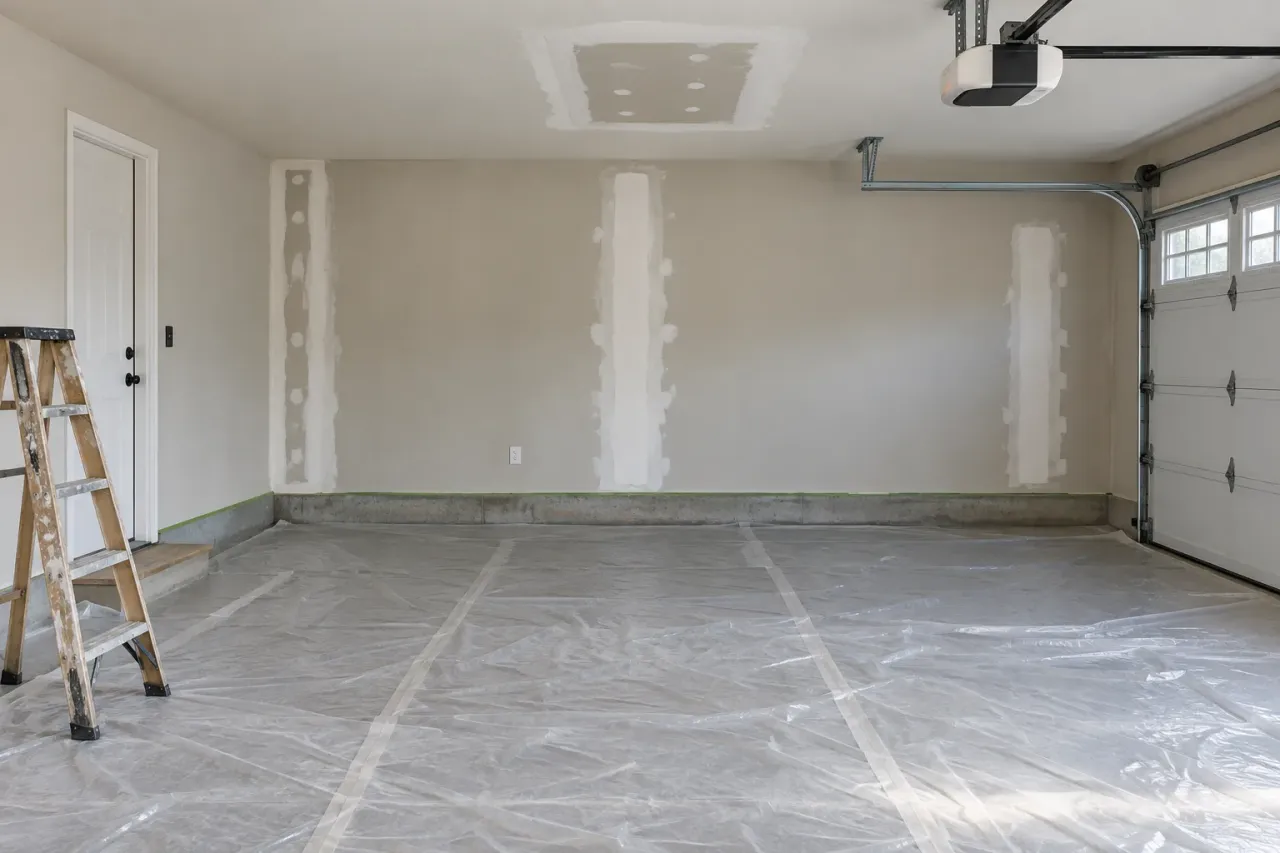
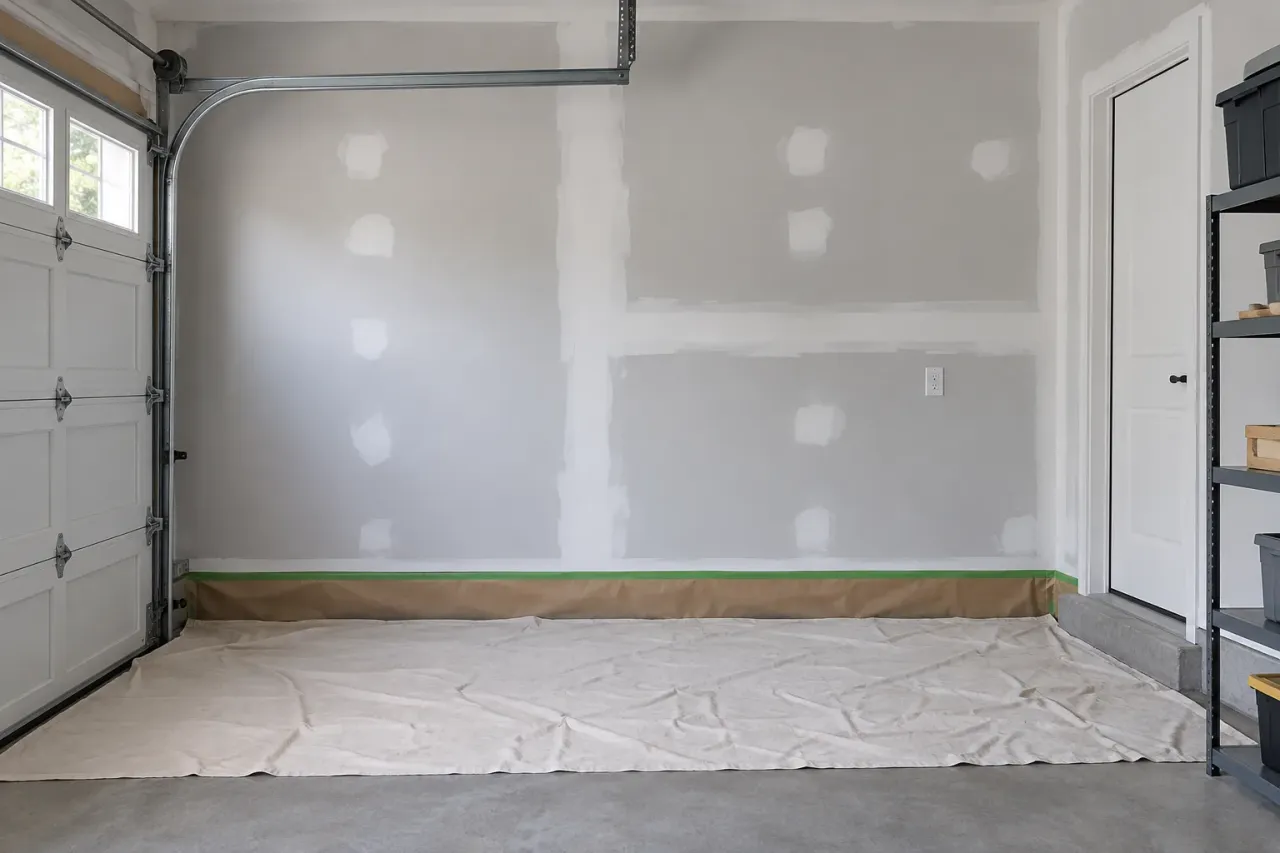
Sanded drywall, primed walls and a completed painted garage are separate handoff stages. A quote should state which one it includes. Confirm dust removal, primer, corrections found after primer and finish coats rather than relying on the broad phrase paint-ready.
A local repair may still need a larger repaint for consistent colour and sheen. Aged or unknown coating can make a small touch-up noticeable. The garage repair before painting guide explains how the physical repair and decorating boundaries connect without necessarily being the same size.
If you plan to paint yourself, ask what preparation remains and who handles defects found during the agreed inspection. Saving the painting stage for later can be a reasonable choice, but the estimate should not make it appear that a sanded repair is already a finished painted wall.
Protection, cleanup and waste should be explicit
Garages often contain tools, stored fabrics, equipment and a route into the house. The work plan should identify what moves, what remains protected and how access is controlled. A small seam repair can require a larger protection area, especially on a ceiling.
EPF uses dust-controlled sanding with HEPA support where appropriate. Extraction reduces dust but does not remove the need for containment and cleanup. Ask whether the quote includes collecting work-area waste, removing repair debris and preparing the area for the next trade. A broad household clean is a different service.
If board removal or repeated setup is part of the job, waste handling and protection can be meaningful components of the total. They should not be discovered only when the garage is already opened. Clear inclusions help compare proposals without assuming that every contractor means the same thing by cleanup.
Small jobs still involve visits and readiness
A short seam can require preparation, reinforcement, successive finishing stages and inspection before decoration. The elapsed time is not necessarily one continuous visit. Product readiness and garage conditions affect the sequence, even when the damaged area is modest.
A project minimum may apply to cover the practical setup and return work, but this guide does not invent a fixed minimum charge. Ask for the total for your listed repairs. Dividing a hypothetical full-garage rate by a small fraction of the floor area does not establish a valid price for a local job.
If nearby patches also need attention, have them assessed as optional additions. Shared setup may help, but separate protection or painting can change the work. Compare a base repair total with a clearly described expanded scope rather than assuming all extra defects become inexpensive once the crew is present.
Phased access can increase repeated work
A homeowner may need to keep part of the garage available for storage or household access. Separate phases can be discussed, but they may require repeated protection, tool movement and cleanup. A later phase may also overlap a previously finished wall or ceiling transition.
Ask for the same repair scope priced under a continuous access plan and the proposed phased plan where useful. The comparison shows what the access requirement changes. It is more informative than expecting each half of a garage to cost exactly half of one uninterrupted project.
Choose finishing boundaries that make sense for the actual planes. A shared ceiling does not necessarily divide neatly at an imaginary line between parking and storage areas. Describe how the work will stop and restart, including any broader blending or painting needed at the transition.
Moisture and uncertain construction are separate decisions
Active moisture should be addressed and affected materials assessed before cosmetic repair. A stain does not establish the replacement boundary, and a dry-looking surface does not certify concealed conditions. Necessary investigation or related repair should not be hidden inside a routine finishing allowance.
Where there is visible sagging, loose board or ongoing movement, arrange the appropriate assessment before normal finishing. The drywall contractor's price should follow the agreed findings. It should not be treated as structural certification or a guarantee that an unresolved cause has disappeared.
Keep related work identifiable in the comparison. A garage quote that excludes source repair may still be appropriate if that work is already handled. The important point is that the homeowner understands the dependency and does not schedule finishing before the base is ready.
Build a quote comparison that is easy to review
Use the same photographs and sketch for each estimator. Beside each proposal, record the included defects, preparation assumptions, board work, finish treatment, primer or painting, protection and cleanup. Add the expected sequence and any access requirements. A simple list is sufficient if it names the actual work.
Confirm taxes, exclusions and the process for approving additional findings. Avoid treating an uncertain allowance as a fixed completed price. If two contractors recommend different repairs, ask what evidence or assumption led to the difference before choosing only by the total.
The most useful quote is one you can connect to the garage you see and the result you want. A precise-looking number without a clear scope offers less practical certainty than a well-described proposal that identifies what still needs assessment before work begins.
Request a garage drywall repair estimate
Send EPF your city, wide garage photos, numbered close-ups, approximate wall and ceiling heights and the intended finish. Mention previous repairs, moisture history, storage constraints and any upcoming trade work. Include which areas are essential and which are optional improvements.
Use the quote form to provide the brief and a photo link if available. You can also note that photographs are ready to share. EPF can then confirm the assessment needed and prepare a scope based on your actual failed seams, damaged areas and desired handoff.
A garage repair budget becomes more useful when it follows the sequence from suitable base to finished surface. Clear inclusions let you compare local repair, selected refinishing and a more complete package without inventing one rate that is supposed to fit every garage problem.
Planning this repair in Grimsby
For a Grimsby estimate, include your address or nearest intersection and identify each damaged seam or board section. If there are only a few repairs, group the photographs into one enquiry and state whether primer or painting is wanted, so the proposed scope and return visits can be assessed together.
EPF serves all Grimsby neighbourhoods. Review Grimsby garage repair coverage and neighbourhoods, then include your location with the repair details when requesting an estimate.
FAQ
What is the fixed price for garage drywall repair?
This guide does not advertise a fixed rate. Failed material, board work, access, finish and decoration vary; request a written scope for your garage.
Can I use a new-drywall taping rate for repairs?
Not directly. Repair may involve removal, assessment, damaged board and existing coatings that are not part of finishing sound newly installed drywall.
Why can a small garage repair need several visits?
Preparation, reinforcement, compound coats and decoration have separate readiness requirements. Setup and return work do not shrink exactly with the damaged area.
What should two comparable quotes include?
Use the same defects, preparation assumptions, board work, finish, primer or paint, access, protection, cleanup and exclusions.
Field Photos
What the Work Can Look Like
Article Review
AuthorEPF Pro Services
Reviewed byEPF Pro Services
UpdatedSeptember 11, 2026
Plan your drywall scope
Get a drywall quote today
Share photos, room sizes, and timing. We reply the same day with GTA drywall availability and a clearer written scope.
Quick next step